Introduction: Why “Mould Cleaning Solutions” Matter for Sydney Homes
Sydney’s warm, humid climate makes it a prime breeding ground for household mould. From black streaks in the bathroom to musty spots on bedroom walls, mould not only ruins your home’s aesthetic but also threatens your health and wellbeing. For many, the first impulse is to reach for chemical-laden products, but natural mould cleaning solutions are rapidly gaining popularity for their safety, efficacy, and environmental credentials.
Understanding which DIY methods work—and which situations warrant professional intervention—is vital for Sydney residents. This comprehensive guide covers four evidence-based natural mould cleaning solutions, offering exact recipes, application tips, and clear signs it’s time to call experts like Sydney Cleaning Expert. Not only does this approach protect your health and the planet, but it ensures your cleaning routine aligns with the latest regulatory standards and SEO-aligned best practices for those seeking practical advice online.
Let’s explore the best natural approaches, complete with the science behind each one, safety considerations, and the moments when DIY simply isn’t enough.
Why Choose Natural Mould Cleaning Solutions Over Chemicals?
Household bleach and chemical sprays may seem like quick fixes, but their drawbacks are well-documented. Bleach, for instance, is classified as a respiratory hazard and can cause health and environmental issues, particularly when used in poorly ventilated areas. Moreover, chemical cleaners often fail to kill mould at its roots, simply bleaching the colour and risking regrowth.
Natural mould cleaning solutions, on the other hand, combine real effectiveness with low toxicity. They harness the antimicrobial, antifungal, and deodorising properties of simple, familiar substances, not only cleaning visible mould but also discouraging its return. These methods are safer for families, pets, and the planet—a concern increasingly important to Sydney’s eco-conscious community.
Additionally, new research has confirmed that several natural products (like vinegar, baking soda, hydrogen peroxide, and tea tree oil) are as effective as many commercial cleaners at removing a broad spectrum of domestic moulds, particularly when combined with proper technique and moisture control strategies.
Vinegar Mould Cleaning Solution: A Go-To for Many Households
Why Vinegar Works Against Mould
Distilled white vinegar is a potent, food-safe acid (usually 5–8% acetic acid), with proven antifungal and antibacterial benefits. Laboratory studies show vinegar kills up to 82% of common household mould types, including many found in Sydney homes (such as Aspergillus, Cladosporium, and Penicillium).
How to Use Vinegar for Mould Cleaning
Basic Vinegar Mould Cleaning Solution Recipe:
- Pour undiluted distilled white vinegar into a clean spray bottle.
- Spray generously on mouldy surfaces—tiles, walls, bathroom grout, glass, and some fabrics.
- Let it sit for at least 1 hour (for best results).
- Scrub with a brush if needed, then wipe with a damp cloth.
- Repeat as necessary for stubborn stains.
Optional enhancements: A few drops of essential tea tree oil can be added to the vinegar for increased antifungal efficacy and a fresher scent.
Key Advantages:
- Breaks down mould at the cellular level.
- Penetrates porous surfaces better than bleach, targeting mould beneath the surface.
- Leaves no dangerous residue and deodorises musty smells.
Limitations:
- A strong vinegar smell can linger temporarily (though it clears as vinegar dries).
- Not recommended for use on natural stone (like marble or unsealed granite) or hardwoods, as repeated acid exposure can etch or dull these surfaces.
Quick-Access Table: Vinegar Mould Cleaning Solution
Surface | Is Vinegar Safe? | Application Tips |
Bathroom tiles | Yes | Generously spray, let sit 1 hr |
Grout | Yes (avoid on unsealed) | Use brush to remove residues |
Painted walls | Yes, test first | Light mist, avoid soaking paint |
Natural stone | No | Use alternative cleaner |
Fabrics | Yes (test colourfast) | Soak in diluted solution |
Expert Tips: Always wear gloves, use goggles, and ventilate the area while treating with vinegar, especially if you have respiratory sensitivities. For persistent or hidden mould, repeated applications may be necessary.
Competitor Advice and Recipe Variations
Many popular cleaning blogs and DIY guides agree on using undiluted vinegar for maximum effect, sometimes recommending a secondary wipe with a baking soda solution for extra scrubbing power or odour control. Some suggest pairing vinegar with essential oils like eucalyptus or citrus, both for their antifungal effects and to mask the strong scent—although purity and adequate dwell time are the keys to success.
When Vinegar Isn’t Enough:
Vinegar is ideal for small-to-moderate surface outbreaks. If the mould recurs frequently, appears deep within porou
Baking Soda Mould Cleaning Solution: Gentle, Safe, and Effective
Why Baking Soda Works for Mould Cleaning
Baking soda (sodium bicarbonate) is a gentle, non-toxic cleaning agent that raises the surface pH, making environments hostile to mould. Its powdery, mildly abrasive texture allows it to physically lift mould and absorb moisture—the key to preventing regrowth. Unlike bleach, it is safe for children, pets, and sensitive surfaces.
How to Use Baking Soda for Mould Cleaning
Simple Baking Soda Mould Cleaning Solution:
- Dissolve 1 tablespoon of baking soda in 1 cup of warm water. Pour into a spray bottle and shake well.
- Spray on the mouldy area. Let sit for 10–15 minutes.
- Scrub with a stiff brush or sponge for hard, textured, or grouted areas.
- Wipe clean with a moist cloth and let dry.
- For prevention, reapply a light baking soda spray and allow it to dry on the surface.
For Tougher Spots:
Make a thick paste with two parts baking soda and one part water. Apply directly, let dry for 1 hour, then scrub and rinse.
Why Choose Baking Soda?
- Absorbs excess moisture, helping prevent mould from returning.
- Excellent deodoriser for musty areas (closets, carpets, under sinks).
- Can be combined with vinegar for foaming action, though the reaction itself does not boost mould-killing power—instead, it helps lift residues.
Limitations:
- Best suited for smaller surface patches, grout, and as an odour absorber.
- Not powerful enough for deep infestations behind walls or on very porous surfaces.
Expert Tips: Avoid using baking soda on deeply stained porous materials that cannot be replaced or don’t tolerate moisture. For clothing, add baking soda to the laundry and sun-dry for best mould elimination.
Summarising Baking Soda Mould Cleaning Solution
Application Area | Recommended Recipe | Effectiveness |
Tile & grout | Spray or paste, scrub after 15 min | Moderate to high |
Painted walls | Weak solution, spot test recommended | Good for maintenance |
Carpets, upholstery | Spot treat with paste, vacuum when dry | Surface cleaning |
Deodorising | Leave open bowl/bag in musty area | Absorbs odour |
Comparing Baking Soda with Other Solutions
Research and DIY cleaner roundups cite baking soda as a versatile, safe option that is especially popular in households with allergies, pets, and small children. However, it is not a standalone solution for large or hidden mould outbreaks. For stubborn patches, layering with vinegar, hydrogen peroxide, or professional attention is most effective.
Hydrogen Peroxide Mould Cleaning Solution: Deep Disinfection That’s Safe
Why Hydrogen Peroxide Works Against Mould
Hydrogen peroxide is a powerful oxidizer available in most pharmacies (typically as a 3% solution). When sprayed onto mould, it reacts and breaks down cell walls, killing a wide variety of fungi and bacteria. The effervescent fizzing helps physically lift and remove debris, too.
Hydrogen peroxide is non-toxic, environmentally friendly, and doesn’t produce harmful fumes—making it a professional favourite for bathrooms, kitchens, and other hard surfaces prone to moisture.
How to Use Hydrogen Peroxide Mould Cleaning Solution
Hydrogen Peroxide Mould Cleaning Solution Recipe:
- Pour 3% hydrogen peroxide directly into a clean spray bottle (do not dilute).
- Spray affected surfaces thoroughly so they are visibly wet.
- Allow the area to sit for 10–15 minutes to maximize the antimicrobial effect.
- Scrub the area with a stiff brush or non-abrasive sponge.
- Wipe away residue with a clean cloth, rinse, and let the area dry completely.
Where Is Hydrogen Peroxide Most Effective?
- Non-porous bathroom and kitchen surfaces.
- Tile grout and silicone seams.
- Sealed countertops and some washable fabrics (test for colour-fastness first).
- Fridge seals, rubber gaskets, and window sills.
Advantages:
- Fizzes grime and mould from surface crevices.
- Bleaches out mould stains on white or light surfaces.
- Safer than bleach and suitable for many allergy-prone homes.
Limitations:
- Not recommended for untreated wood, fabrics with dyes, or porous surfaces—may cause discolouration or limited penetration.
- Should NOT be combined in a bottle with vinegar, as this forms peracetic acid, which can be hazardous.
Safety Tips: Wear gloves and eye protection, ventilate the area, and keep peroxide in a dark bottle (light degrades it). Always conduct a spot test for colourfastness.
Hydrogen Peroxide Mould Cleaning Solution at a Glance
Surface | Is It Safe? | Notes/Tips |
Tile, grout, bathroom | Yes | Fizzing action helps deep cleaning |
White fabrics (spot use) | Test first | Watch for bleaching on colours |
Painted surfaces | Use with caution | May lighten paint |
Porous or soft materials | Not recommended | Doesn’t penetrate deeply |
Hydrogen Peroxide vs. Chemical Mould Cleaning Solutions
In recent years, medical, scientific, and cleaning industry literature has documented hydrogen peroxide as a safer, more effective alternative to both bleach and ammonia for mould removal on hard surfaces. Its use is endorsed by industry bodies for homes with children, pets, and allergy sufferers.
Why Tea Tree Oil Is a Premier Natural Mould Solution
Tea tree oil (from Melaleuca alternifolia) packs a potent punch as a natural antifungal and antibacterial. Its active compound, terpinen-4-ol, disrupts the structure of mould spores and prevents regrowth, even on porous surfaces like fabric, unfinished wood, and grout.
Unlike some commercial antimicrobials, tea tree oil leaves a residual effect—helping deter future mould colonization. It’s safe for most hard and soft surfaces (always spot-test), and a little goes a long way.
How to Use Tea Tree Oil Mould Cleaning Solution
Tea Tree Oil Mould Cleaning Solution Recipe:
- Mix 1 teaspoon (about 50 drops) of 100% tea tree oil with 1 cup (250 ml) of water in a spray bottle.
- Shake well and spray directly onto the mouldy surface, ensuring complete coverage.
- Leave on for at least 1 hour.
- Scrub gently with a soft brush or cloth as needed. No rinse required—let the area air dry to extend anti-mould protection.
Advantages:
- Highly effective even at low concentrations.
- Leaves a lasting barrier against regrowth.
- Natural scent is fresh, though strong for some.
Limitations:
- Relatively more expensive than some natural alternatives.
- Can be overpowering in unventilated areas—ensure good airflow.
- Not suitable for families with allergies to Melaleuca (rare).
Special Uses:
- Spot treat clothing and soft furnishings (test first for colourfastness).
- Excellent for bathroom grout, rubber, window frames, HVAC vents, and tight corners.
Tea Tree Oil Mould Cleaning Solution: Pros and Cons
Benefit | Limitation |
Potent antifungal/antibacterial activity | Cost is higher than household staples |
Works on porous and non-porous surfaces | Scent can be strong |
Long-lasting residual effect | Not usually used for large-scale outbreaks |
Non-toxic for humans and pets (external use) | Essential oil—do not ingest |
Expert Blend:
For a heavier-duty spray, some recommend combining tea tree oil, a little white vinegar, and warm water. This boosts both the scent and mould-fighting synergy for stubborn spots, though both compounds are effective individually.
At-a-Glance Comparison: Natural Mould Cleaning Solutions
Solution | Main Strength | Best For | Key Limitation | Safety |
Vinegar | Antifungal, deodorant | Tiles, grout, walls | Smell, not for natural stone/wood | Very high |
Baking Soda | Moisture absorber, scrub | Grout, fabrics, odours | Surface impact only, not deep cleaning | Very high |
Hydrogen Peroxide | Deep disinfectant | Bathrooms, glass | Lightens colours, not for all fabrics | High |
Tea Tree Oil | Residual antifungal | Grout, walls, fabrics | Cost, strong scent | Very high |
These four methods represent the most recommended natural mould cleaning solutions in current cleaning literature, with each finding favour in both DIY and professional contexts.
DIY Safety and Local Precautions for Mould Cleaning Solutions
Personal Safety
- Protective equipment: Always wear gloves, a mask (preferably an N95 or P2 respirator), and eye protection. Mould spores can cause respiratory irritation, headaches, and allergic reactions, especially when disturbed.
- Ventilation: Open windows and doors to ensure airflow. Avoid mixing chemicals (e.g., never combine hydrogen peroxide with vinegar or bleach).
- Disposal: Bag discarded cleaning cloths and contaminated materials and remove them from the home promptly.
Selecting the Right Solution
- Always test in an inconspicuous area before tackling visible mould, especially on painted, natural, or delicate surfaces.
- Do not attempt to clean carpets, insulation, or large areas (>10 sq ft/1 m²) yourself. These require professional assessment and possible material replacement.
Regulations and Recommendations in Sydney
Sydney’s public health agencies and building standards require rental properties to be clean, habitable, and free from severe mould. Landlords and tenants share responsibilities for reporting and addressing mould. If mould results from structural or moisture issues not caused by the resident (e.g., leaks, faulty ventilation), the landlord must remedy the problem and, if necessary, arrange professional cleaning solutions.
For larger properties or cases arising in strata/communal spaces, owners’ corporations may be responsible for remediation and ensuring all cleaning complies with NSW health guidelines.
When DIY Isn’t Enough:
If you experience persistent symptoms (chronic cough, sneezing, asthma worsening), or notice mould returning after repeated cleaning, consult a professional mould cleaning solutions service. Sydney regulations recommend this when affected areas are large, recurring, or appear in sensitive building cavities like HVAC systems.
When to Call Professional Mould Cleaning Solutions in Sydney
Natural mould cleaning solutions are excellent for minor outbreaks, especially on hard, non-porous surfaces or in well-ventilated, easy-to-reach spots. But certain circumstances mean DIY isn’t appropriate or safe:
Signs You Need Professional Help
- The mould covers a large area—generally more than 10 square feet (1 m²), in line with Environmental Protection Agency and NSW Health recommendations.
- Recurrence after repeated DIY cleaning.
- Mould in HVAC systems, behind walls, under floors, or in crawl spaces (hidden or inaccessible areas).
- Significant water damage or recent flooding.
- Worsening health symptoms after exposure—especially in kids, elderly, or immunocompromised people.
- Rental, strata, or shared accommodation where repairs and cleaning may be subject to specific regulations and require documentation.
- Musty odours that persist even after cleaning, which may indicate hidden mould growth.
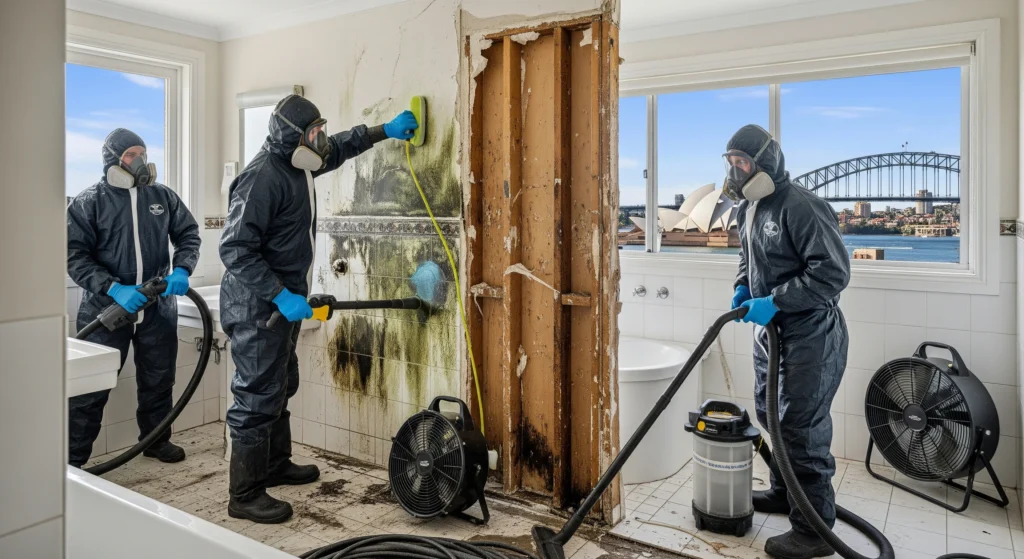
What Professional Mould Cleaning Solutions Offer
- Thorough inspection: Determining both visible and hidden mould and the underlying moisture source for long-term solutions.
- Specialist equipment: HEPA vacuums, negative air machines, professional-grade (sometimes plant-based) cleaning agents.
- Safety and compliance: Use of personal protective equipment (PPE), proper containment, and disposal of hazardous waste.
- Documentation: For insurance, landlord, or strata committee requirements.
- Prevention advice: Fixing moisture sources, ventilation improvement, and routine monitoring.
The Soft Promotional Pitch: Why Choose Sydney Cleaning Expert?
At Sydney Cleaning Expert, we combine in-depth local knowledge with safe, scientifically-backed mould cleaning solutions. Our team offers both natural and advanced plant-based options for homes and businesses—including unique blends with proven remedial oils. We know when gentle DIY will suffice, and when a professional approach is needed to protect your health, property value, and compliance with NSW regulations.
If you’re facing persistent mould, unexplained musty smells, or are unsure about the best approach, contact Sydney Cleaning Expert for an inspection and tailored mould cleaning solution. Don’t wait—mould spreads quickly, and prompt action saves you money, time, and worry.
Final Tips for Natural Mould Cleaning Solutions
Prevent Mould from Returning:
- Control dampness—always fix leaks, and use exhaust fans or dehumidifiers in high-risk spaces.
- Allow for air circulation; open windows when possible.
- Run exhaust fans during and after showers or cooking.
- Store household items dry, and regularly check for condensation or hidden wet spots.
Routine Maintenance:
- Wipe down potentially mould-prone areas weekly using one of the natural cleaning sprays above as a preventative.
- Keep humidity in your home below 50%.
- Sun-dry and clean washing machines and bathroom mats regularly.
Monitor and Act Quickly:
- Mould can double in size in as little as 24–48 hours under the right conditions. The earlier you address it, the less likely it will cause serious damage or health problems.
Conclusion: Take Control with Mould Cleaning Solutions Today
DIY natural mould cleaning solutions—vinegar, baking soda, hydrogen peroxide, and tea tree oil—provide safe, reliable ways to tackle minor mould outbreaks in your Sydney home. Their effectiveness is backed by modern research and household wisdom, bringing peace of mind to health- and eco-conscious families.
However, always recognise your limits: when mould is widespread, hidden, or persistent—or if you have health worries—Sydney Cleaning Expert offers advanced, compliant, and fast-response mould cleaning solutions that prioritise your safety and satisfaction. Why gamble? Get trusted, professional help and safeguard the comfort and value of your Sydney property.
If you need advice or a no-obligation quote, don’t hesitate to contact Sydney Cleaning Expert today—your one-stop solution for all things “mould cleaning solutions” in Australia’s most beautiful city.
Ready to try one of these solutions or unsure of the next step? Reach out to Sydney Cleaning Expert for practical advice, a thorough inspection, or to book our proven professional mould cleaning solution for your home or business.